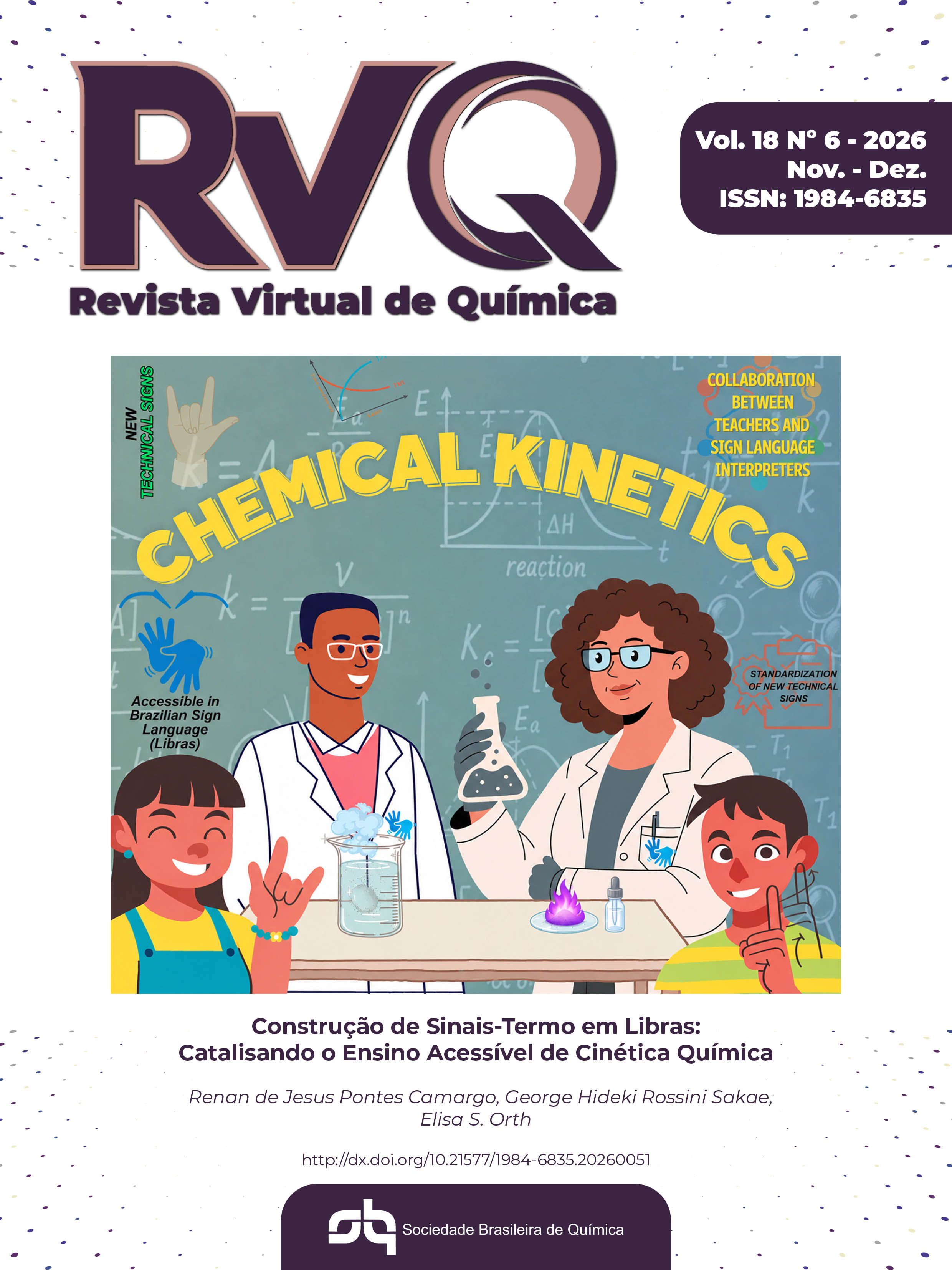
Low-Temperature Partitioning Without Freezing in Liquid‑Liquid Extraction: Determination of Thiamethoxam Residues in Percolation Water
DOI:
https://doi.org/10.21577/1984-6835.20260057Resumo
Thiamethoxam is a neonicotinoid insecticide widely used in bean cultivation for pest control; however, its high water solubility and low soil retention increase the risk of leaching and groundwater contamination. In this study, a method based on low-temperature partitioning liquid-liquid extraction and high-performance liquid chromatography with diode-array detection was developed to determine thiamethoxam residues in leachate samples. The extraction procedure was optimized using univariate analysis to assess solvent selectivity, solvent-to-sample ratio, and freezing time. Acetonitrile was selected as the extraction solvent at a 1:1 solvent-to-sample ratio, yielding extraction recoveries of 102 ± 5 %. The main methodological innovation was eliminating the conventional freezing step used in LLE-LTP, as efficient phase separation and satisfactory thiamethoxam recovery were achieved through controlled cooling without completely freezing the aqueous phase. The method was validated in accordance with the SANTE/11312/2021 guideline and showed satisfactory selectivity, precision, accuracy, and robustness. The limit of quantification was 10 µg L-1, lower than the maximum level permitted for drinking water. The method was successfully applied to leachate water samples from greenhouse bean cultivation experiments, in which thiamethoxam residues were detected after foliar spraying, indicating greater leaching potential with this application strategy.
Downloads
Arquivos adicionais
Publicado
Edição
Seção
Licença
Copyright (c) 2026 Revista Virtual de Química

Este trabalho está licenciado sob uma licença Creative Commons Attribution 4.0 International License.
Autores que publicam nesta revista concordam com os seguintes termos:
Os direitos autorais para artigos publicados nesta revista são do autor, com direitos de primeira publicação para a revista. Em virtude do acesso público, os artigos são de uso gratuito em aplicações educacionais e não-comerciais desde que com reconhecimento da autoria e da publicação nesta revista.