
Mapeamento de Interações Intermoleculares de Inibidores de Segunda Geração da mTOR: Evidências Computacionais para o Desenho de Novos Ligantes
DOI:
https://doi.org/10.21577/1984-6835.20260046Resumo
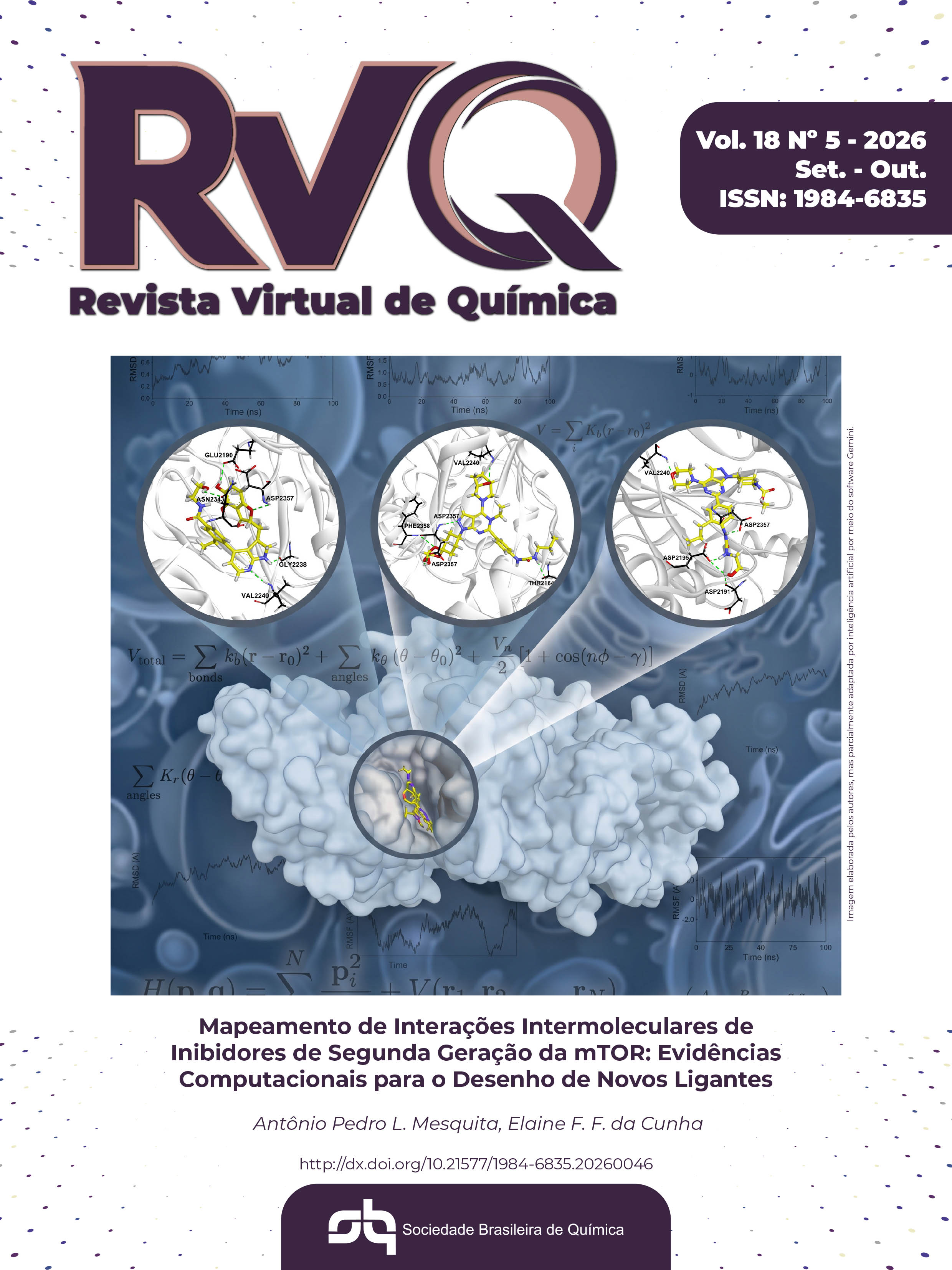
Second-generation mTOR inhibitors have been widely explored for their potential to overcome selectivity and efficacy limitations of earlier drugs. In this study, we performed a comprehensive mapping of intermolecular interactions between 59 ATP-competitive mTOR inhibitors and the kinase active site using molecular docking. The analysis revealed conserved anchoring features, particularly hydrogen bonds involving the hinge region (Val2240 and surrounding residues) and hydrophobic contacts distributed along the ATP pocket. Distinct structural classes including purine, pyrimidine, and morpholine containing scaffolds exhibited characteristic interaction patterns that correlated with experimental IC50 trends. Compounds bearing dual hinge-binding motifs showed the most favorable docking energies and interaction consistency. Based on the most recurrent and stabilizing contacts, we proposed new ligand designs incorporating optimized aromatic cores, enhanced hydrogen-bond donors/acceptors, and tailored substituents for improved occupancy of hydrophobic subpockets. These findings provide computational evidence supporting structure-based strategies for developing next-generation mTOR inhibitors with enhanced affinity and interaction specificity. Overall, the study confirms key determinants of ligand recognition and offers a rational foundation for future medicinal chemistry optimization.
Downloads
Arquivos adicionais
Publicado
Edição
Seção
Licença
Copyright (c) 2026 Revista Virtual de Química

Este trabalho está licenciado sob uma licença Creative Commons Attribution 4.0 International License.
Autores que publicam nesta revista concordam com os seguintes termos:
Os direitos autorais para artigos publicados nesta revista são do autor, com direitos de primeira publicação para a revista. Em virtude do acesso público, os artigos são de uso gratuito em aplicações educacionais e não-comerciais desde que com reconhecimento da autoria e da publicação nesta revista.